DJI Osmo Pocket 4 Review: The Ultimate Pocket-Sized Gimbal Camera for Creators
What used to be a space ruled by flagship smartphones and bulky action cameras is now dominated by one undisputed king: DJI’s Pocket lineup.

What used to be a space ruled by flagship smartphones and bulky action cameras is now dominated by one undisputed king: DJI’s Pocket lineup. With the release of the new DJI Osmo Pocket 4, the brand aims to solidify its technical leadership. Here is an in-depth breakdown of its features, key benefits, and areas where there is still room for improvement.
What’s New? Breaking Down the Pocket 4 Upgrades
At the core of the Osmo Pocket 4 is an evolved modular sensor and a brand-new Neural Processing Unit (NPU)dedicated entirely to AI tasks. This is not just a cosmetic facelift; it is a complete internal re-engineering.
- Upgraded 1-Inch Dynamic Sensor: While the sensor size matches the golden standard of the previous generation, its internal architecture delivers a much wider native dynamic range. This means bright skies and dark shadows are perfectly balanced in-camera without needing heavy post-processing.
- Hardware-Driven ActiveTrack 7.0: Subject tracking no longer relies on your phone's CPU. The camera autonomously handles face, body, and object recognition, keeping subjects dead-center even during sharp panning motions.
- Quad-Pixel Phase Detection Autofocus (PDAF): Slow focus in low-light environments is a thing of the past. The camera locks focus almost instantly, making it perfect for quick close-ups (Product Showcase mode).
Key Benefits: Why It Stands Out
1. True Mechanical Stabilization vs. Digital Cropping
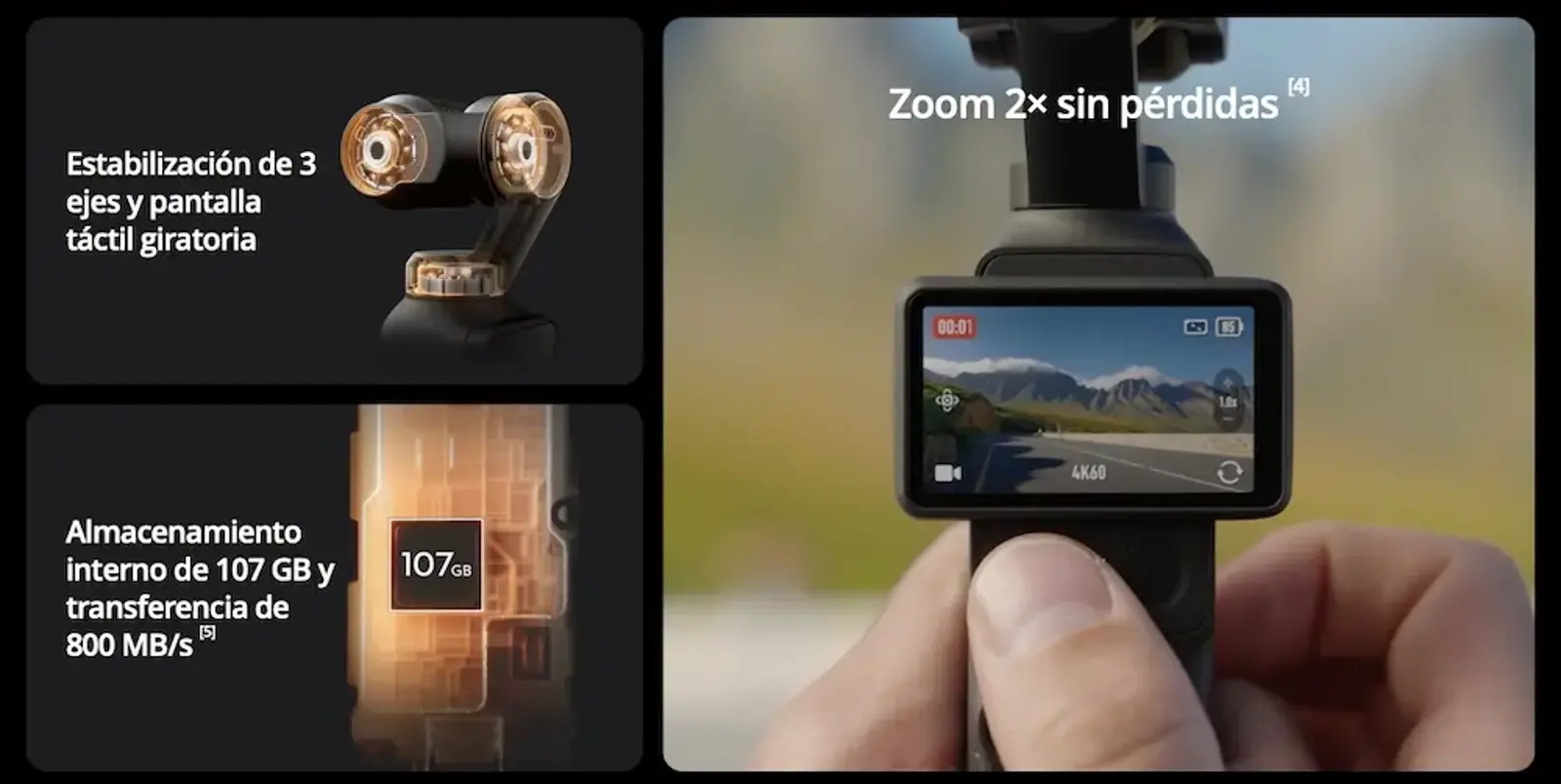
Unlike high-end smartphones or action cameras that digitally crop the image to smooth out shakes, the Osmo Pocket 4 uses a physical 3-axis gimbal. This delivers a cinematic smoothness that mimics professional movie rigs—without losing a single pixel of resolution and completely eliminating the "jello effect" in night shots.
2. Native Vertical and Horizontal Shooting
Built for the TikTok, Shorts, and Instagram Reels era, the rotating OLED touchscreen does more than just flip the UI. The gimbal motor physically rotates the sensor to shoot in native 9:16 aspect ratio, utilizing the full lens resolution without any digital cropping loss.
3. Built-In Pro-Grade Audio
The Pocket 4’s microphone array features AI-powered adaptive noise cancellation. It isolates the creator's voice while dampening wind or traffic noise, removing the need to carry external wireless mics in most day-to-day scenarios.
Pros and Cons: The Technical Verdict
Pros
- Ultra-Compact Form Factor: DSLR-like performance that literally fits in the palm of your hand.
- 4K Video at 120 fps: Perfect for crisp, cinematic slow-motion shots.
- Advanced Color Profiles: Native 10-bit D-Log M support, giving professional editors massive flexibility during color grading.
- Magnetic Ecosystem: Fast charging and accessories that snap into place instantly via magnets.
Cons
- Fragility: Due to its moving mechanical parts (the gimbal), it is far more delicate than a GoPro. It is not built for extreme sports or rough drops.
- Not Waterproof Out of the Box: Requires a dedicated waterproof case if you want to take it underwater.
- Pricey Accessory Ecosystem: While the base camera is competitively priced, maximizing its potential with the Creator Combo (magnetic lenses, battery grips) requires a significant extra investment.
Is It Worth It?
The DJI Osmo Pocket 4 is a high-tier productivity tool for travel vloggers, digital journalists, and creators who want maximum video quality with minimum bulk. It outperforms any smartphone in ergonomics and thermal management (no overheating during long takes) and delivers a premium aesthetic that action cams—with their distorted fisheye lenses—simply cannot replicate.