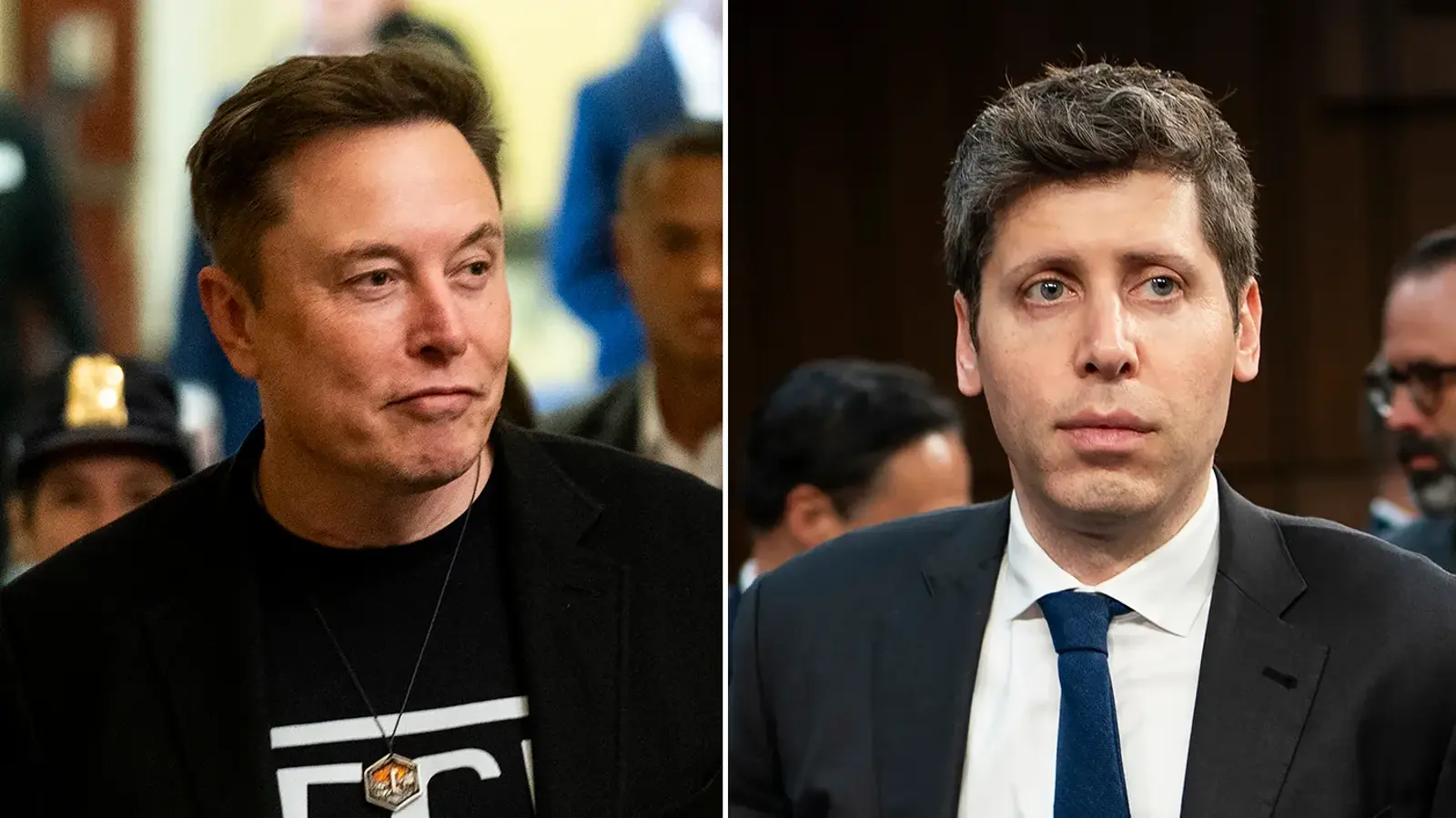
The Clash of Titans The Altman-Musk Showdown: The Trial Redefining the Soul of Artificial Intelligence
For years, the rivalry between Elon Musk and Sam Altman felt like a typical Silicon Valley billionaire spat: snarky tweets, pointed interview barbs, a...

WorldDepths
Administrator
For years, the rivalry between Elon Musk and Sam Altman felt like a typical Silicon Valley billionaire spat: snarky tweets, pointed interview barbs, and egos orbiting higher than SpaceX’s own satellites. But by 2026, the tension finally breached the dam of corporate diplomacy, spilling into the California courts as the most consequential tech trial of the decade. This is no mere financial dispute; it is a battle for the soul and ownership of the tool that promises to rewrite human history.
The conflict centers on OpenAI, the powerhouse behind ChatGPT. Musk, in a stance blending personal betrayal with an ethical crusade, accuses Altman and the current leadership of deserting the original mission they established in 2015. According to the tycoon, OpenAI was born from a sacred commitment to develop artificial intelligence for the benefit of all humanity—openly and freely—rather than becoming the opaque, profit-driven machine it has evolved into under Microsoft’s shadow.
The story unfolds like a Greek tragedy adapted into a corporate thriller. Musk was no bystander; he was the financial engine and the public face that lent OpenAI credibility in its uncertain early days, pouring in tens of millions and attracting the industry’s brightest minds. His 2018 departure, sparked by deep disagreements over who should hold the reins of advanced AI, served as the prologue to this definitive rupture. The point of no return came when OpenAI abandoned its non-profit purity for a hybrid commercial structure. To Musk, this transformation was not an evolution, but a surrender that turned the company into a de facto subsidiary of the Redmond giant.
From the other side of the trenches, Sam Altman has built a defense rooted in cold realism. Both he and OpenAI maintain that Musk knew perfectly well that ideals alone couldn't foot the bill for a technology that consumes energy and infrastructure at astronomical levels. The company’s response has been blunt: they claim Musk not only originally supported the pivot to profit, but that his true motivation behind the lawsuit isn't ethics, but rather commercial resentment and a desire to bolster his own firm, xAI, in the race for technological supremacy.
Inside the Oakland courtroom, the atmosphere thickens every time the two face off. Musk has gone as far as to testify that the company "stole" the essence of a charity, somberly warning of the existential risks of commercializing AI at a reckless pace. Altman, maintaining a pragmatic image, insists that without the flow of private capital and the computational power of their partners, OpenAI would be little more than a footnote in computing history today, rather than the empire of innovation leading the global market.
What hangs in the balance of this trial transcends the signatures of two powerful men. The final verdict will answer the most haunting question of our time: Should a technology with the potential to redefine civilization remain under open, collective control, or does it inevitably require the engine of capitalism and massive corporations to thrive? The world watches this Hollywood-caliber spectacle with the certainty that, regardless of who wins, the outcome will dictate whether artificial intelligence functions in the future as a universal public library or as an exclusive luxury asset with restricted access.