Anthropic AI steps into the race, but the real battle is just beginning
Anthropic accelerates Claude’s evolution while scaling enterprise adoption, tightening access policies, and navigating growing regulatory pressure acr...
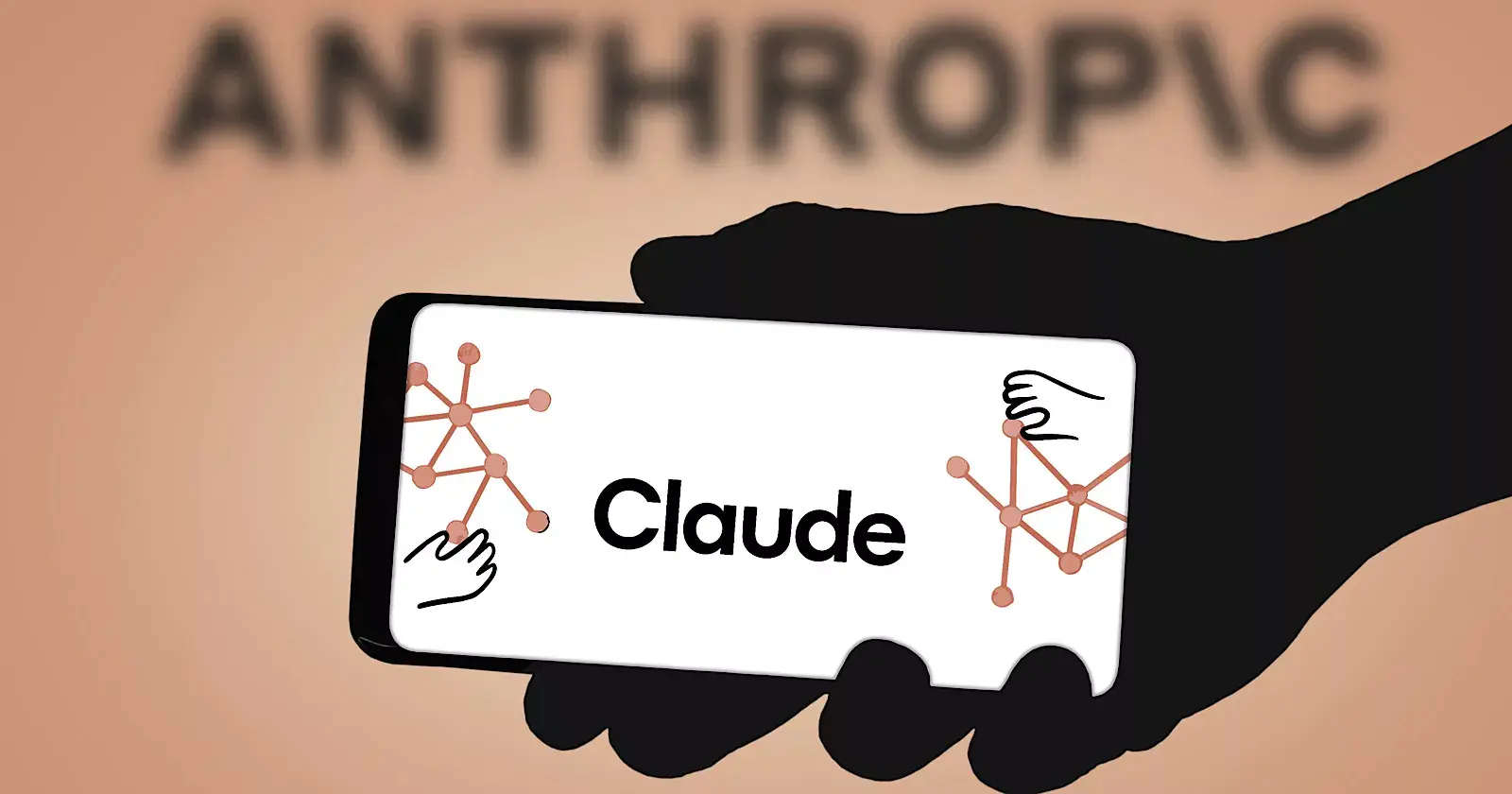

Anthropic accelerates Claude’s evolution while scaling enterprise adoption, tightening access policies, and navigating growing regulatory pressure across global markets.
Anthropic is entering a decisive phase in its development as one of the leading players in advanced artificial intelligence. The company, best known for its Claude model family, has significantly accelerated its technical roadmap throughout 2026, pushing deeper into enterprise deployment while simultaneously facing increasing scrutiny over governance, safety, and access control.
At the core of this expansion is the continuous evolution of Claude’s capabilities. Recent updates have focused on strengthening multi-step reasoning, improving task reliability, and expanding integration with external tools and professional workflows. Rather than positioning Claude purely as a conversational assistant, Anthropic is clearly steering it toward a broader role: an autonomous work system capable of supporting complex operations in software development, data analysis, and business automation.
This technical progression has been matched by a wider distribution strategy. Claude is now embedded across major cloud ecosystems and enterprise platforms, giving it a stronger foothold in corporate environments where demand for secure, controllable AI systems is growing rapidly. Financial services, consulting, and technology companies have been among the earliest and most active adopters, integrating Claude into internal workflows and productivity systems.
However, this rapid expansion has not come without friction. Anthropic has recently adjusted its access policies, limiting certain third-party distribution channels and encouraging direct API usage. While the company frames these changes as necessary to ensure system stability and manage compute demand, industry observers also interpret them as a move to regain tighter control over how its models are deployed at scale.
At the same time, regulatory attention is intensifying. Governments and large institutions are increasingly examining how advanced AI systems are used in sensitive environments, particularly in finance and critical infrastructure. Some organizations have already introduced restrictions on AI usage in specific regions or workflows, reflecting broader concerns around data security, compliance, and operational risk.
In the United States, discussions around AI governance have shifted toward structured collaboration rather than strict limitation. Policymakers are exploring frameworks that would allow controlled deployment of advanced models like Claude in public sector environments, particularly for cybersecurity, administrative efficiency, and large-scale data processing. This signals a gradual shift toward institutional integration rather than outright restriction.
Beyond enterprise and policy environments, Anthropic is also expanding Claude’s role in creative and technical tooling. New integrations with design, media, and development software are turning the model into a more interactive component of production pipelines. This positions Claude not just as a text-based assistant, but as a system capable of interacting directly with professional tools used in real-world creative and technical workflows.
Still, the company’s rapid iteration cycle has sparked discussion among users and analysts. Some have noted changes in model behavior following updates, particularly in reasoning consistency and response style. While such fluctuations are common in fast-evolving AI systems, they highlight the ongoing challenge of balancing innovation speed with stability and predictability.
Strategically, Anthropic now finds itself operating on multiple fronts at once. It is scaling aggressively in enterprise markets, refining its technical architecture, managing regulatory expectations, and competing in an increasingly crowded AI landscape dominated by rapid innovation cycles.
The result is a company that is no longer simply building AI models, but actively shaping how those models are deployed, governed, and integrated into global industries. Claude’s evolution reflects this shift: from a research-driven system to a production-grade platform designed for large-scale operational use.
In this environment, the real competition is no longer just about who builds the most capable model. It is about who can scale safely, integrate deeply, and maintain trust in systems that are becoming increasingly central to economic and institutional infrastructure. Anthropic’s next phase will depend not only on technical progress, but on how effectively it can navigate that broader and far more complex battlefield.