Washington raises pressure on Mexico as U.S. calls for stronger action against “narco-terrorists”
A high-level security visit deepens bilateral tensions amid drug trafficking allegations, migration disputes, and growing scrutiny of Mexico’s securit...

A high-level security visit deepens bilateral tensions amid drug trafficking allegations, migration disputes, and growing scrutiny of Mexico’s security apparatus.
The already complex relationship between Mexico and the United States has entered a more strained phase as Washington signals tougher expectations on security cooperation.
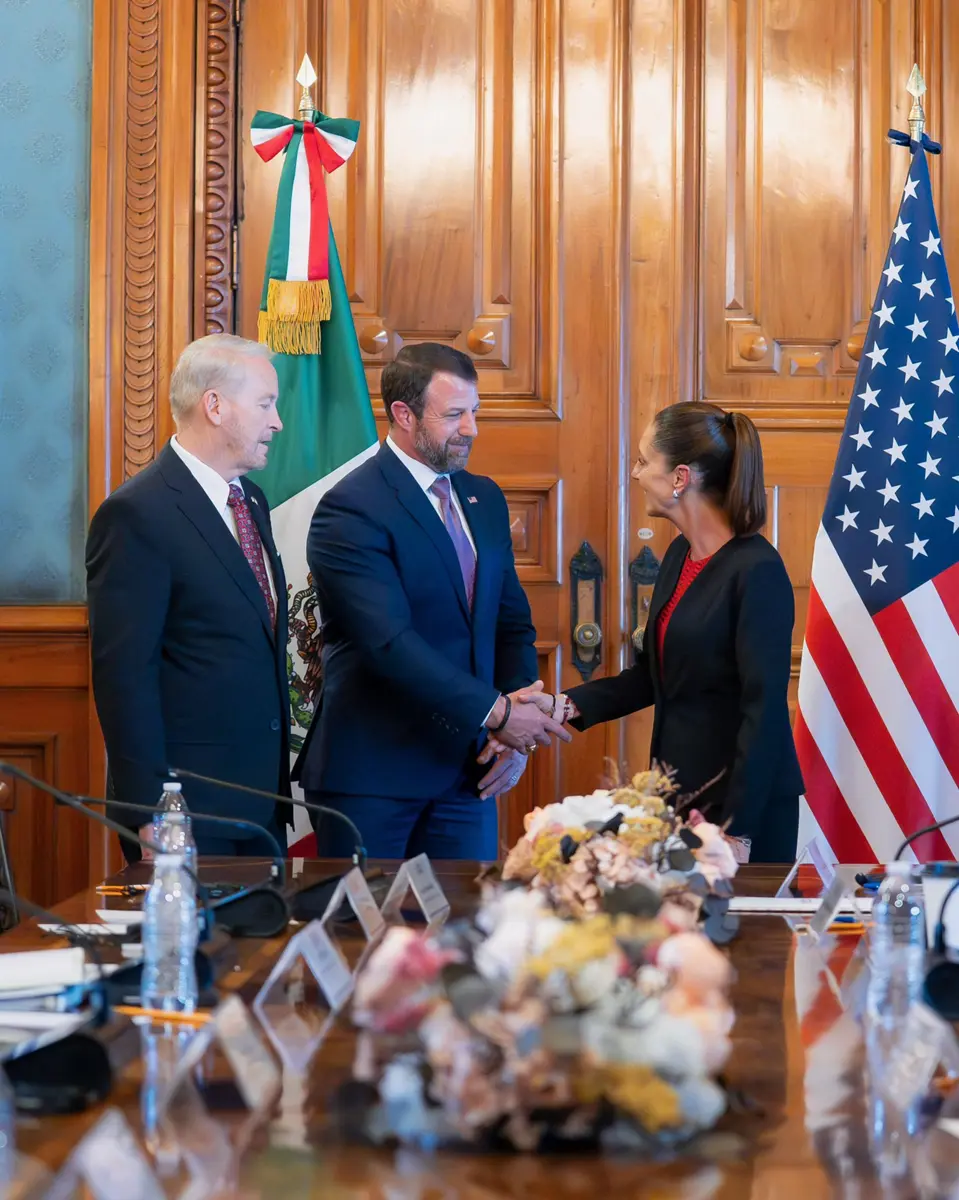
During an official visit to Mexico City, U.S. Homeland Security Secretary Markwayne Mullin urged the government of President Claudia Sheinbaum to “strengthen efforts against narco-terrorists,” underscoring Washington’s increasingly hardline framing of organized crime as a national security threat.
The bilateral talks focused on drug trafficking, irregular migration, and operational coordination along the shared border. Mullin emphasized continued cooperation to combat human trafficking and illegal narcotics, while also highlighting the Trump administration’s border policy, which he described as achieving “historic security levels.”
The visit comes at a sensitive moment for both countries.
Recent weeks have been marked by heightened tensions following the deaths of two CIA officers in a road accident in northern Mexico, near the border states of Chihuahua and Sinaloa—an area heavily affected by synthetic drug production. The incident sparked a diplomatic protest from Mexico after it emerged that U.S. authorities had not informed Mexican officials about the officers’ presence or activities in the country.
At the same time, a New York prosecutor filed charges of drug trafficking and illegal arms possession against ten Mexican officials, including figures linked to the ruling Morena party. Among them are Sinaloa Governor Rubén Rocha Moya and Culiacán Mayor Juan de Dios Gámez. Both have temporarily stepped aside from their posts, while two former state officials have already surrendered to U.S. authorities.
Mexico’s Attorney General’s Office stated that any arrests would depend on the United States providing sufficient evidence. All ten individuals are also subject to an Interpol red notice, allowing for arrest abroad.
Despite the escalating tensions, President Sheinbaum struck a conciliatory tone after the meeting, stating that both sides agreed to continue cooperating “within a framework of mutual respect.” Mexico’s Foreign Ministry emphasized that sustained dialogue remains essential for bilateral security efforts.
Migration remains one of the few areas of convergence. Mexican authorities reported a 97.5% drop in northbound migration flows following stricter U.S. enforcement policies, with crossings falling from over 305,000 at their peak in late 2023 to just over 7,600 this month.
However, new human rights concerns continue to complicate the relationship. Sheinbaum also raised the deaths of 15 Mexican nationals in U.S. Immigration and Customs Enforcement (ICE) detention facilities since 2025, with Mexico planning to take the case to the Inter-American Commission on Human Rights.
As security, sovereignty, and criminal networks increasingly overlap, both governments face mounting pressure to manage a relationship defined as much by necessity as by tension.