THE END OF EFFICIENCY: THE NEW ECONOMY OF DISTRUST
For the past three decades, the business world operated under a sacred premise: maximum efficiency . The goal of any Chief Operating Officer was to fr...
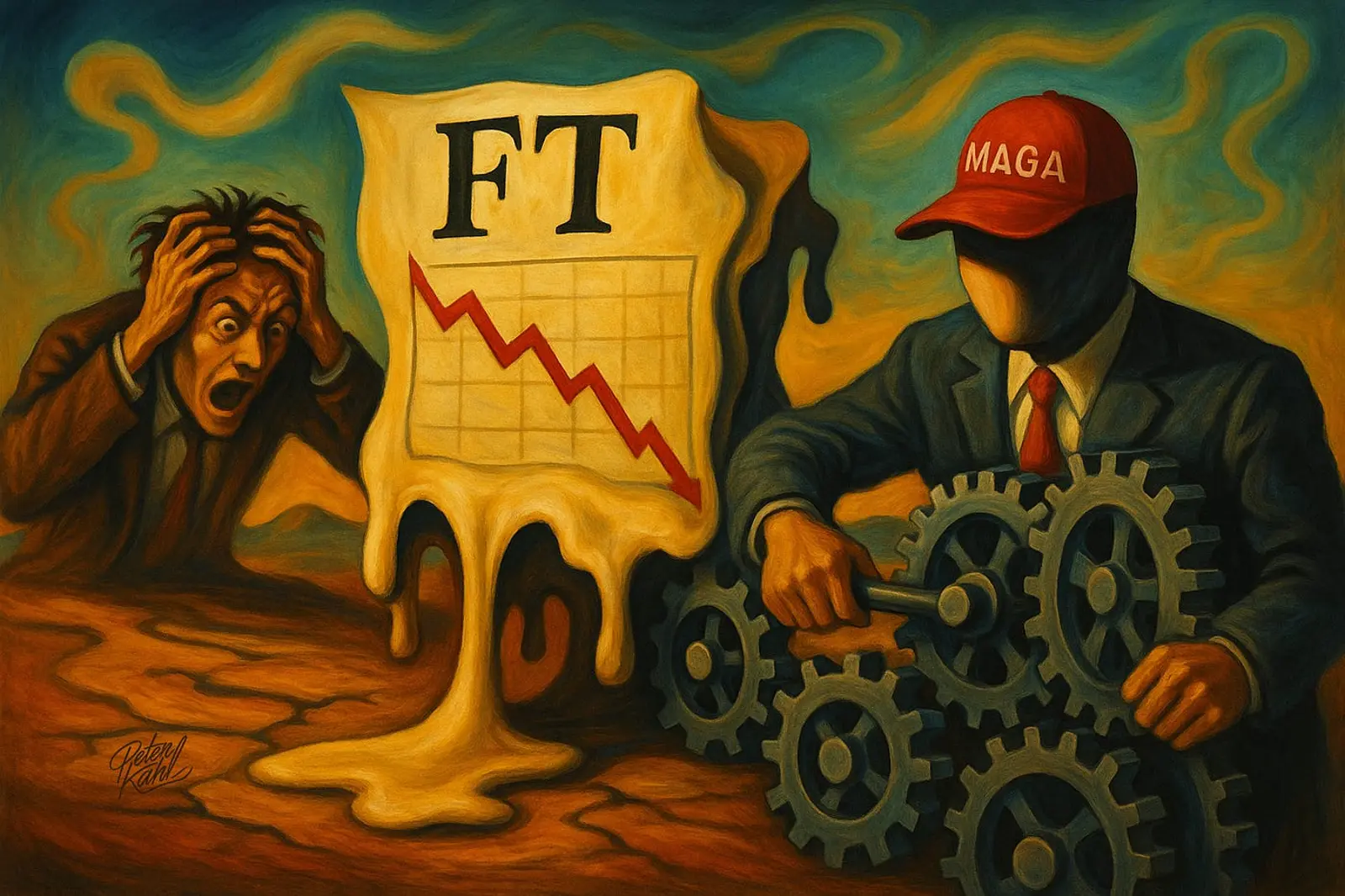

For the past three decades, the business world operated under a sacred premise: maximum efficiency. The goal of any Chief Operating Officer was to fragment the supply chain, seeking the lowest penny-cost in any corner of the planet. This model, driven by hyper-globalization, gave rise to the Just-in-Time system, where inventories were kept at a minimum and products crossed oceans with surgical precision.
However, 2020 was the year the glass shattered. The pandemic, followed by geopolitical tensions and climate crises, revealed that extreme efficiency is, by definition, fragile. Today, the global economy is mutating toward a new paradigm: the shift from "Efficiency" to "Resilience."
From Offshoring to Friend-shoring
We are witnessing the birth of the geoeconomics of distrust. It is no longer enough for a supplier to be the cheapest; they must now be "safe." This has given rise to the term Friend-shoring: the tendency of multinationals to move their production centers to countries that share political values or strategic alliances with their home market.
The map of world trade is being redrawn. Mexico, Vietnam, and Poland are emerging as the big winners of this transition, receiving investments that previously flowed toward low-cost manufacturing hubs with high political risk. This phenomenon is not just a logistical decision; it is a declaration of war against the model of total globalization as we knew it.
Inflation as a Side Effect
This shift comes with a price that we will all pay at the supermarket checkout. The Just-in-Time system was deflationary by nature; it kept prices low by squeezing every cent out of the value chain. The new system, which we could call Just-in-Case, is inherently more expensive.
Maintaining larger inventories, diversifying suppliers, and producing in regions with higher wages to ensure supply introduces structural inflationary pressure. Economists warn that the era of ultra-cheap goods is coming to an end. Supply security is now the new "luxury" that companies must afford.
AI and the Productivity Revolution
In this scenario of rising costs, companies have found a lifeline: Generative Artificial Intelligence. This is not just about chatbots, but the algorithmic optimization of logistics and the automation of administrative processes. If production costs rise due to deglobalization, the only way to maintain margins is through a massive leap in productivity driven by technology.
We are entering an era where competitive advantage lies not in access to cheap labor, but in the ability to process data to predict disruptions. The company of the future is not the one with the largest factory, but the one with the most agile algorithm.
The global economy is heading toward fragmentation into trade blocs. Total integration is being replaced by a network of closed "economic clubs." For investors and entrepreneurs, the challenge is no longer just understanding the market, but understanding politics. In this new order, economics has ceased to be a science of numbers and has returned to being, as in the 19th century, a matter of sovereignty and strategy.